- 0243394034
- info@centralcoastseo.com.au
- Google 1st Pages Guaranteed in Writing.


The Incredible Benefits of Regular Blogging for SEO!

The Incredible Benefits of Regular Blogging for SEO
I’m Brian M Logan, owner of SEO North Sydney, and I’ve been helping businesses climb the search rankings long enough to know one thing with absolute certainty: few things power sustainable SEO growth quite like regular blogging. Blogging remains one of the most powerful, cost-effective, and under-utilised tools for driving organic traffic. When done right, it keeps your website fresh, relevant, and discoverable, ensuring that both Google and your audience have a reason to keep coming back.
How Regular Blogging Boosts Indexing and Visibility
Every time you publish a new blog post, you give search engines a reason to crawl your site again. The more frequently you post, the more often Google’s bots visit, index your pages, and reassess your authority. This process is called indexing frequency, and it’s one of the most overlooked aspects of SEO.
A website that regularly adds high-quality blogs will naturally have a higher indexing rate than one that remains static. Search engines interpret regular updates as a sign of an active, authoritative site that provides ongoing value. In practical terms, that means your new posts—and even your older pages—get discovered and ranked faster. The SEO benefits compound over time as each new piece of content adds another pathway for potential customers to find you.
Without consistent content updates, your website becomes a digital ghost town. Search engines have little incentive to return, meaning your site may slip down the rankings as competitors publish fresh, optimised material.
The Top 10 Reasons Why Blogging Helps Your SEO
Blogging isn’t just a creative outlet—it’s a technical and strategic engine that powers visibility, engagement, and credibility. Here are ten key reasons why consistent blogging remains one of the most potent SEO strategies available to any business, big or small.
1. It Boosts Indexing Frequency
Every time you post a blog, you send a signal to Google that your site is active. This increased crawl frequency helps search engines discover, index, and rank your content faster, ensuring that new keywords and ideas are picked up quickly.
2. It Expands Your Keyword Reach
Blogging allows you to target a much broader range of search queries than your static web pages ever could. From long-tail keywords to seasonal trends, regular content gives you the opportunity to reach new audiences through natural language and varied phrasing.
3. It Builds Topical Authority
When you consistently cover related topics in depth, Google begins to recognise your website as a trusted authority in that area. This “topical authority” boosts the overall performance of your domain, helping all your pages rank higher—not just your blogs.
4. It Encourages Natural Backlinks
High-quality, informative blogs are link magnets. Other sites are far more likely to reference and share a useful article than a generic homepage. Over time, these backlinks strengthen your domain authority, which remains the single most influential factor in Google’s ranking algorithm.
5. It Improves User Engagement Metrics
Well-written blogs keep readers on your site longer, reducing bounce rates and increasing dwell time—both key indicators of quality in Google’s eyes. When users scroll, read, and interact with your content, it signals relevance and authority.
6. It Enhances Internal Linking Opportunities
Blogs provide natural opportunities to connect various parts of your website. By linking from your latest post to service pages or older content, you help Google understand the relationship between your pages while guiding users through your site more effectively.
7. It Fuels Your Social Media Strategy
Each blog post becomes a shareable asset across social platforms. Sharing your blogs on Facebook, LinkedIn, and X (formerly Twitter) not only drives referral traffic but also signals to search engines that your brand is active and engaging across multiple channels.
8. It Increases Conversion Potential
Blogging builds trust. Visitors who read multiple articles on your site are far more likely to make an enquiry or purchase because they’ve already developed confidence in your expertise. Educational content converts browsers into buyers.
9. It Provides Content for Email Marketing
Your blog is a ready-made source of fresh material for newsletters and email campaigns. Linking back to new posts drives ongoing engagement, encourages repeat visits, and helps maintain a healthy, traffic-generating cycle.
10. It Future-Proofs Your SEO Strategy
Algorithms change, trends shift, and new technologies emerge—but valuable, evergreen content never stops performing. A well-maintained blog library ensures your SEO investment continues to pay dividends for years to come.
The Importance of Human-Written Content
While it might be tempting to flood your site with AI-generated blogs, the truth is that Google is becoming exceptionally good at detecting low-effort, machine-written content. What works instead is human-crafted writing that demonstrates expertise, empathy, and authenticity. That’s where a specialist SEO copywriter earns their keep.
Search algorithms reward content that is original, insightful, and written for human readers—not robots. Blogs should not just fill space; they should answer real questions, solve customer problems, and reflect the unique voice of your business. A professional SEO copywriter understands how to integrate keywords naturally, structure articles for readability, and optimise for search intent without sacrificing tone or flow.
At SEO North Sydney, we pride ourselves on producing human-written content that performs not only for Google’s crawlers but for the people who actually make purchasing decisions. When you invest in quality, you build trust with both your audience and the search engines.
The Power of Consistency
Consistency is what separates successful SEO strategies from the rest. I always recommend publishing at least one new blog post per week. This rhythm keeps your content pipeline active and your indexing rate steady. Each post acts as a new entry point for search traffic, covering long-tail keywords and niche questions that your competitors might be missing.
A weekly posting schedule also signals to Google that your site is alive and authoritative, improving your chances of earning featured snippets or top-of-page visibility. From a business standpoint, regular blogging keeps your audience engaged and reminds potential customers that you’re still out there, still providing expertise, and still leading in your field.
If weekly blogging sounds daunting, that’s where partnering with a dedicated SEO content team like ours comes in. We take care of the strategy, keyword research, and copywriting so you can focus on running your business while we grow your online presence.
What Happens When You Stop Blogging
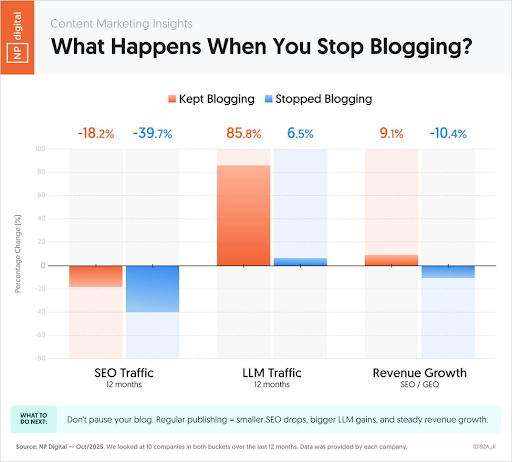
Many businesses start strong with their content strategy, then slow down once the initial excitement fades. But the moment you stop blogging, your SEO momentum starts to decay. Without new content, Google visits your site less often, your indexing frequency drops, and your organic traffic begins to plateau—or worse, decline.
Competitors who continue publishing will overtake you in search results because they’re feeding Google’s need for freshness and relevance. Your audience also notices the silence. A neglected blog can make your business look inactive or outdated, damaging your credibility. In short, stopping your blogging effort means surrendering hard-earned visibility to others.
Expanding Your Reach Through Social Media
Once your blogs are published, don’t just leave them sitting on your website. Amplify them by sharing across your social channels: Facebook, LinkedIn, and X (formerly Twitter). Each share drives referral traffic, builds brand awareness, and increases engagement signals that can indirectly benefit your SEO. It’s also an excellent way to keep your existing followers informed and attract new audiences who might not have discovered you otherwise.
Social media sharing is where your blog content starts to earn its keep. One well-crafted post can travel far beyond your own site, bringing in traffic, backlinks, and brand exposure.
The Blog Writing Takeaway
Regular blogging is more than a marketing habit—it’s an SEO powerhouse. It increases your indexing rate, boosts keyword rankings, enhances user engagement, and establishes long-term authority. But above all, it requires commitment to quality and consistency.
At Central Coast SEO, we specialise in crafting human-written blog content that performs for both Google and your customers. If you’re ready to turn your blog into a true growth engine, let’s talk about building a content strategy that delivers real, measurable results.