- 0243394034
- info@centralcoastseo.com.au
- Google 1st Pages Guaranteed in Writing.


How AI Is Changing Website Security And Why It Matters For Small Business SEO
How AI Is Changing Website Security And Why It Matters For Small Business SEO
As a small business owner, it is easy to think of website security as something that belongs to your developer or IT provider. I understand why. When I talk to business owners about SEO, they are usually concerned with rankings, traffic, leads and conversions, rather than what is happening behind the scenes with plugins, permissions and vulnerabilities.
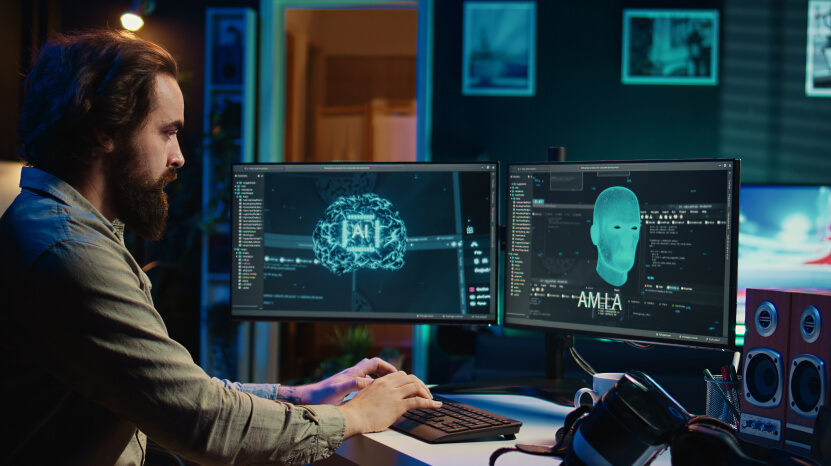
However, I increasingly see website security as part of SEO itself. A website that gets hacked, infected with malware, redirected to malicious pages or taken offline can quickly lose its organic visibility. With artificial intelligence making cyberattacks faster and easier to execute, I believe small businesses need to start treating AI-powered security as another part of their digital marketing strategy.
AI Is Making Website Attacks More Accessible
One of the biggest changes we are seeing is that AI can reduce the technical knowledge required to identify weaknesses. An attacker no longer necessarily needs to spend hours manually researching a website, understanding its technology stack and working through potential vulnerabilities.
AI can help automate reconnaissance, analyse code, identify outdated components and suggest ways that weaknesses could potentially be exploited. The important point for a small business owner is not to panic about AI suddenly attacking your website. It is to recognise that the barrier to sophisticated cyber activity is becoming lower.
If your website is running an outdated content management system, vulnerable plugin or poorly configured server, that weakness may become considerably more valuable to an attacker when automated tools can discover it quickly.
This is where I believe small businesses should turn the same technology towards defence.
Use AI To Find Website Weaknesses Before Someone Else Does
One of the most practical applications of AI is using it as an additional security auditing layer. AI-assisted development and security tools can examine website code and configuration for potential weaknesses, identify suspicious patterns and help developers understand where attention should be focused.
I would not recommend giving an AI tool unrestricted control over a live website and simply asking it to fix everything. Security requires judgement, particularly when a change could affect functionality, customer information or SEO.
Instead, I see AI as an extremely useful assistant for your developer or technical SEO provider. It can help identify areas that deserve investigation while a human makes the final decision about what should actually be changed.
For small businesses without large technical teams, this can be particularly valuable because it allows limited resources to be focused on the highest-risk problems.
Website Security Is Now An SEO Issue
From an SEO perspective, the consequences of a compromised website can be severe.
A hacked website can suddenly generate spam URLs, unwanted redirects or completely irrelevant pages. It can become inaccessible to search engines, return unexpected server responses or display security warnings to visitors. In serious cases, an outage can interrupt both organic traffic and enquiries.
This is why I do not consider technical SEO and website security to be completely separate disciplines. Search engines need to crawl your website reliably, understand its content and trust that the pages being served to users are legitimate.
If an attacker changes that environment, your SEO can suffer even if your keyword strategy, content and backlinks remain unchanged.
For a small business that has spent years building local search visibility, losing those rankings because of a preventable security problem would be incredibly frustrating.
Small Businesses Should Monitor Changes, Not Just Rankings
One area where I think AI can become particularly useful is website monitoring.
Most business owners already monitor Google rankings, Search Console traffic or website conversions. However, I would also want to know when something unusual happens technically.
AI-assisted monitoring can potentially help identify unusual changes in website files, unexpected page creation, suspicious redirects, strange login activity or other anomalies. The advantage is that a system can monitor activity continuously rather than waiting for a business owner to notice that something looks wrong.
This matters for SEO because early detection can significantly reduce the amount of damage a compromised website causes.
If hundreds of spam pages appear and remain indexed for weeks, recovering the website can become considerably more complicated than detecting the problem shortly after it begins.
Keep The Basics Secure
Despite all the excitement around AI, I would not allow the technology to distract from the fundamentals.
Keeping WordPress, plugins, themes, libraries and other website software updated remains incredibly important. So does using strong authentication, limiting administrative access and removing software that is no longer required.
I also recommend that small business owners know exactly who has access to their website, hosting account, domain and analytics platforms. Excessive permissions create unnecessary risk, particularly when former employees, contractors or agencies retain access long after they stop working with the business.
AI should strengthen these processes rather than replace them.
Security Should Protect Your SEO Investment
I have always viewed SEO as a long-term investment. You build content, improve technical performance, earn authority and gradually establish visibility within your market. Website security protects that investment.
As AI becomes more capable, I believe the smartest approach for small businesses is to use it defensively. Let AI help your technical team identify weaknesses, monitor unusual activity, review code and prioritise potential problems, while keeping human oversight over important changes.
The businesses that benefit most will not necessarily be those with the biggest cybersecurity budgets. They will be the ones that recognise that security, technical SEO and AI are increasingly connected and start using the technology proactively rather than waiting for something to go wrong.
If you want to protect your website while strengthening its SEO performance, contact Central Coast SEO and let us help you identify the technical risks that could be holding your business back.